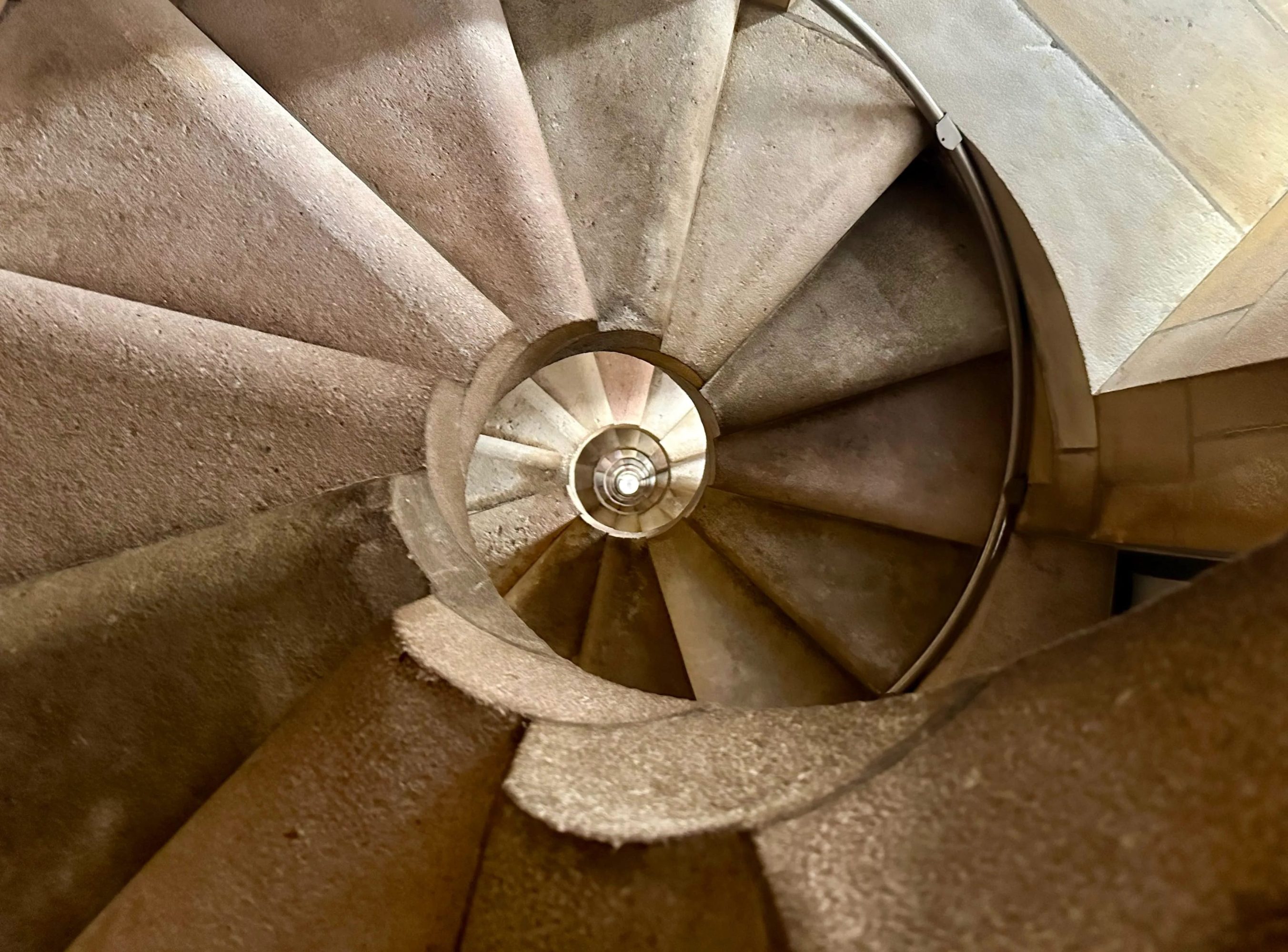
Gaudí and Nature: The Secret Behind Barcelona’s Shapes (2026 Centenary Special)

From a very young age, Antoni Gaudí was a curious child and a relentless observer. He was as fascinated by nature as he was by craftsmanship. In his father’s workshop, he marveled at how human hands could transform basic elements into complex objects. But Gaudí didn’t invent shapes out of thin air: he found them in his surroundings. While other architects obsessed over straight lines and drafting rules, he focused on the curve of a tree trunk, the spiral of a seashell, or the perfect structure of a bone.
That is the true magic of Gaudí. It’s why his famous quote, “My client (God) is not in a hurry” makes more sense today than ever: nature was his greatest teacher, and she dictates her own pace.
This year, 2026, Barcelona dresses up to commemorate the centenary of his death. It’s a historic moment that will culminate with the highly anticipated inauguration of the Jesus Christ Tower at the Sagrada Familia. With the Pope’s confirmed visit to bless the highest point of the Barcelona skyline, there has never been a better time to understand why “God’s Architect” decided that his best guide was simply life itself.
The Inspiration: Nature as a Teacher
For Gaudí, architecture wasn’t about raising lifeless walls, but rather “cultivating” spaces that vibrate with life. Understanding that nature is the most efficient engineer, the genius transformed Barcelona into an ecosystem of stone, light, and color where nothing is accidental. Below, we invite you to explore his masterpieces with fresh eyes, discovering how every column, balcony, or staircase is actually a secret whispered by the natural world he loved so much.
La Sagrada Familia
Did you know this church was conceived as a Bible sculpted in stone?
That’s right—its facades are biblical stories carved into rock to last for millennia for everyone to witness. Its interior narrates the cycle of life and death through a breathtaking spectacle of light and colors inside a stone forest.
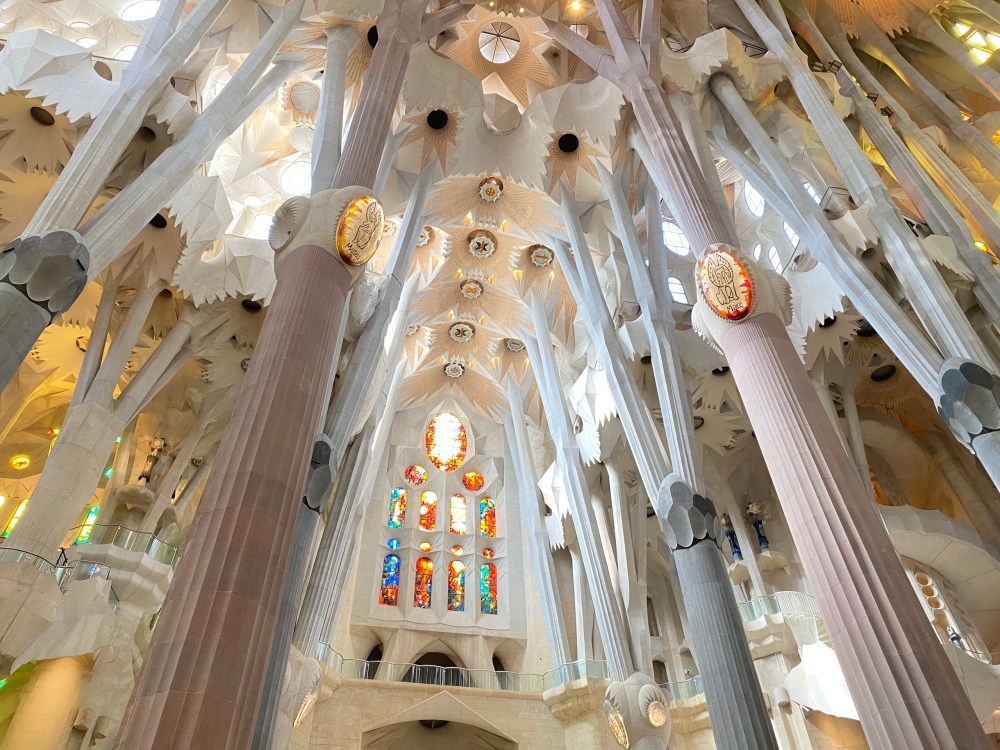
Columns that come to life 🌳
It’s no coincidence that its doors are made of leaves. Crossing the threshold, the architecture transforms into a forest of stone.
Gaudí designed columns that branch out at the top like tree trunks, eliminating the need for heavy, dark walls.
This tree-like structure distributes weight with the same efficiency as a pine forest, allowing light to filter inside just as it would through the canopy of a living woods.
|
 |
|
Light: The rhythm of life and dusk ☀️🎨
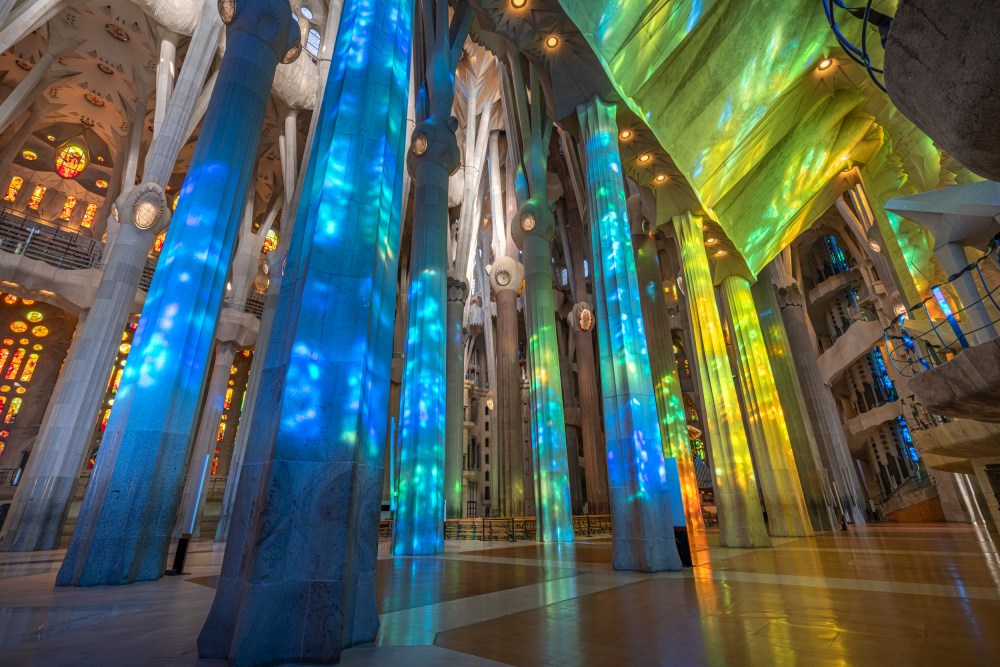
For Gaudí, light was the “paint” of architecture. He didn’t just illuminate the space; he designed a chromatic score that changes with the rhythm of the sun. The light show Gaudí designed for the interior of the Sagrada Familia is deeply influenced by nature and holds a profound religious meaning about the life and death of Jesus.
- In the morning, light pierces the Nativity Façade, flooding the nave with blues, greens, and light yellows. These cool tones symbolize awakening, peace, and the beginning of life. It’s the moment when the “stone forest” feels freshest and most serene.
-
At sunset, the spectacle transforms radically. The sun hits the Passion Façade, casting intense reds, oranges, and ochres. These warm colors represent sacrifice, maturity, and deep spirituality.
|
The seashell climbing to the sky: The secret of the towers 🐚
After visiting the towers, you’ll find the Sagrada Familia’s staircases, which mimic the perfect spiral of a mollusk.
By removing the central axis, Gaudí allowed light and air to flow with natural efficiency.
It is pure “geometry of life”: architecture that stops being mere stone to become organic poetry inspired by the sea.
|
 |
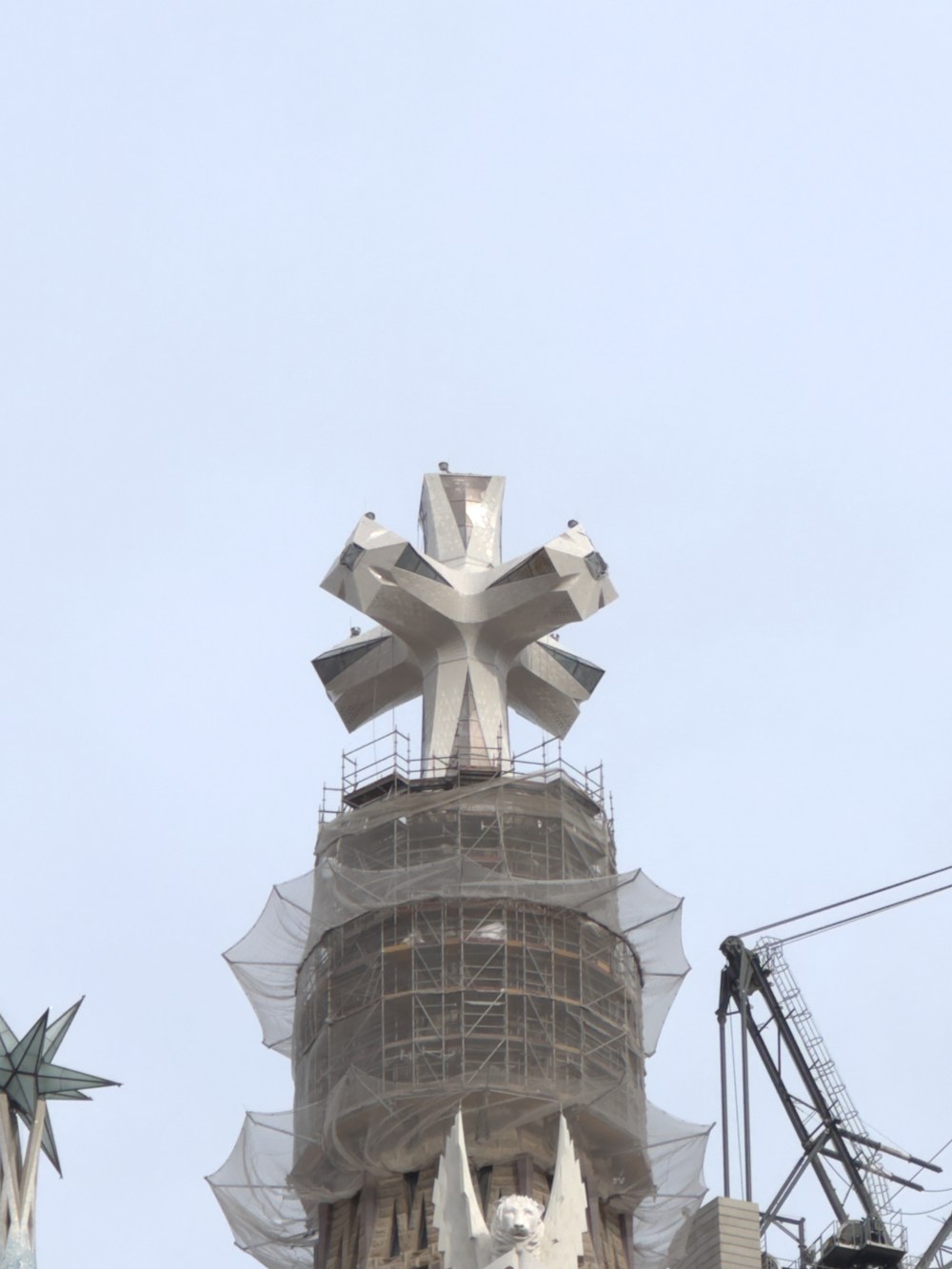 |
The Clover Cross: Barcelona’s new roof ☘️
Today, thanks to this imposing structure, you can spot the Sagrada Familia and its main tower from almost anywhere in Barcelona, no matter which direction you look.
This year, 2026, the Sagrada Familia is finally crowned as the tallest church in the world thanks to its new Jesus Christ Tower. Gaudí continues to surprise us even 100 years after his passing, as the cross topping it is truly special.
Inspired by the four-leaf clover—where each leaf holds a symbolic meaning of faith, hope, love, and luck—it achieves unparalleled harmony by integrating this element of nature with the ultimate symbol of the cross.
|
Casa Milà – La Pedrera
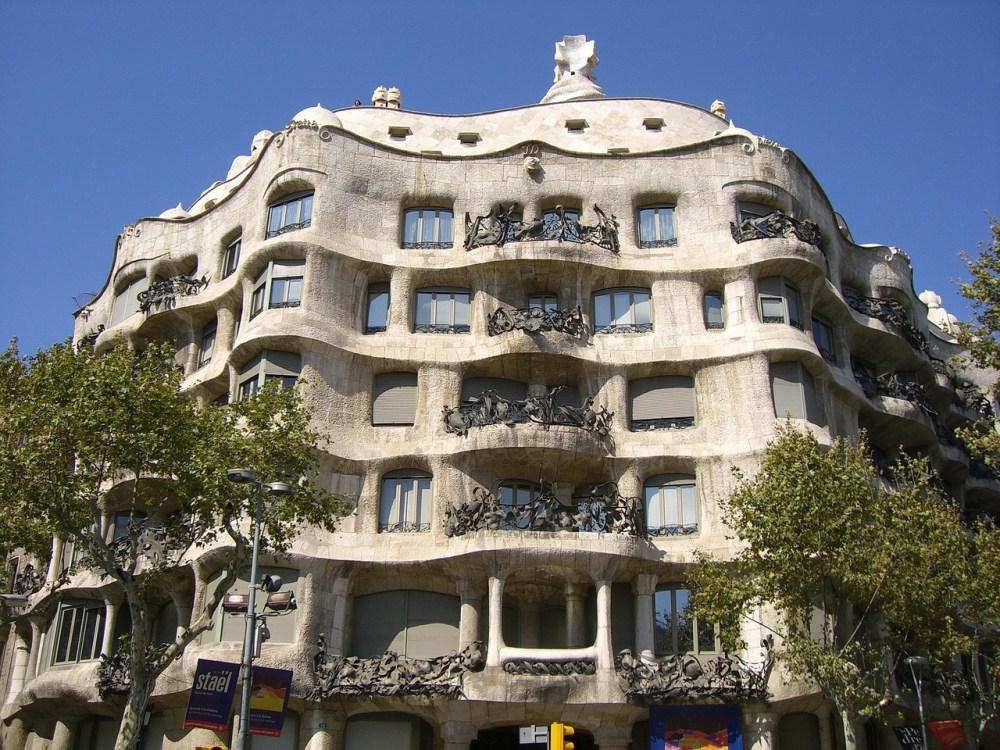
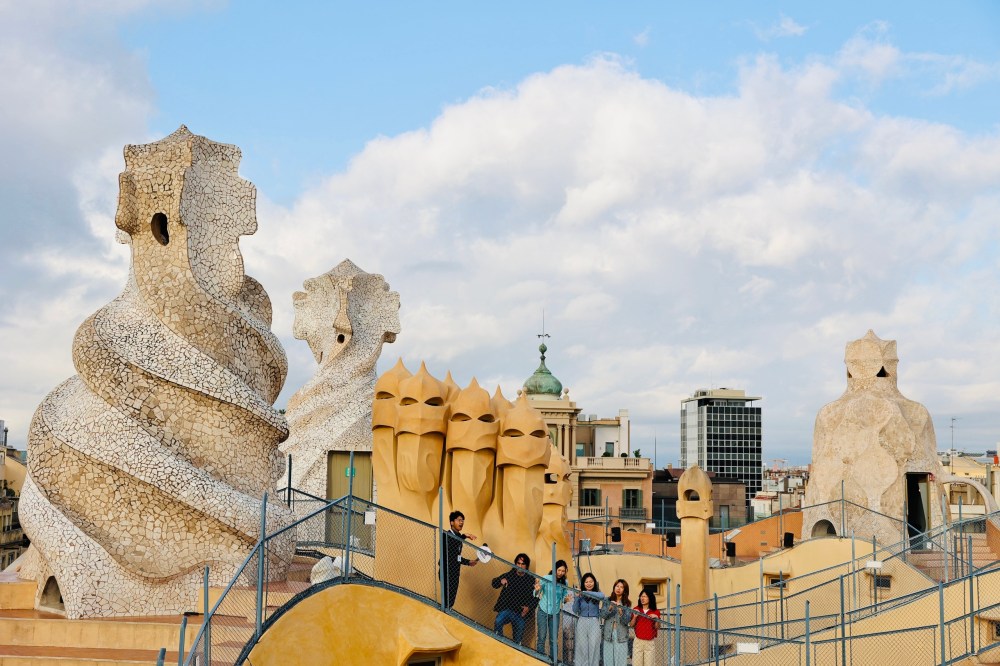
Popularly known as La Pedrera (The Stone Quarry), this masterpiece is perhaps the most radical example of how Gaudí integrated the landscape into the city. It’s not a conventional residential building, but rather a livable sculpture.
Cliffs eroded by time 🌊
Defying all the conventions of his time, Gaudí conceived a spectacular facade that evokes the organic shapes of an imposing stone cliff, sculpted and eroded by the constant lashing of wind and waves.
By integrating this living landscape—with its massive undulating volumes and intricate wrought-iron balconies resembling seaweed tangled in the rocks—the architect managed to bring the majesty and movement of the Mediterranean coast right into the city. The result is a masterpiece that seems to beat with a life of its own.
|
 |
 |
Animal and plant patterns in the lungs of a fantasy world
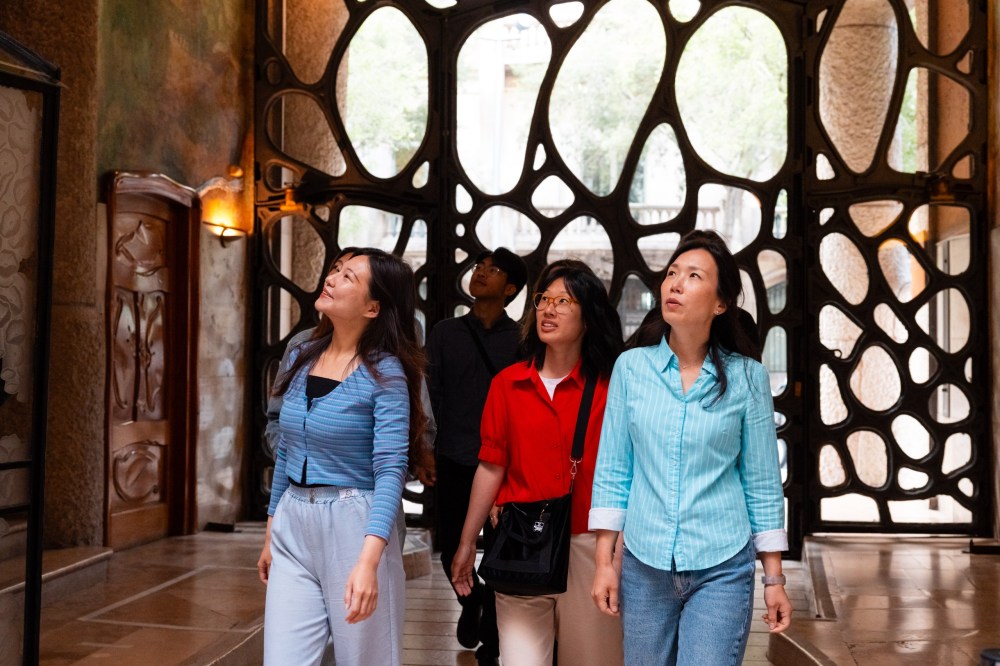
Upon crossing the threshold of Casa Milà, visitors leave behind the rigidity of the city to dive into an organic fantasy world that seems to come alive.
The entrance isn’t just a doorway; it’s a magical transition where wrought iron twists like vine shoots, and the walls of the inner courtyard burst into polychrome frescoes mimicking lush vegetation.
Thanks to this design, Gaudí allowed skylight to filter down into the heart of the building, creating an enchanted forest atmosphere where stone and color blend in perfect harmony. It is here you realize that La Pedrera is not just a house, but a living organism breathing through its courtyards.
|
Geometry of nature: Inside a colossal creature 🐳🦴
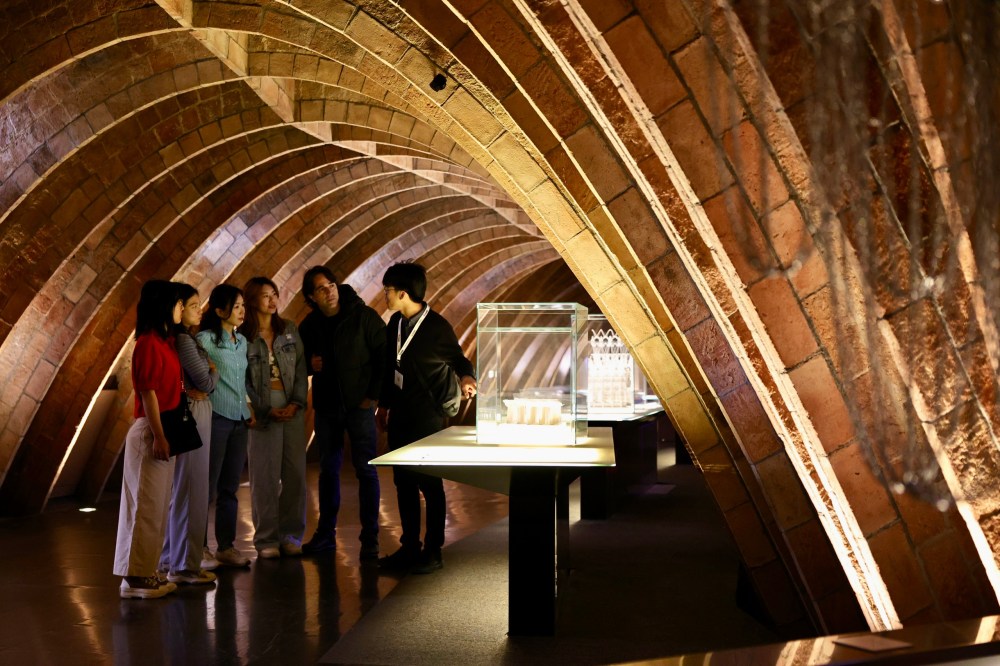
Climbing up to the attic of Casa Milà, you feel as though you’ve been swallowed by a colossal creature, literally walking through its ribcage. In this space, Gaudí showcased his structural brilliance using 270 catenary arches made of flat brick. By varying their heights, he created a wavy, mysterious corridor. This succession of arches doesn’t just support the weight of the rooftop with astonishing lightness; it also evokes the silhouette of a whale’s skeleton or the inverted hull of an ancient ship. It’s a refuge of shadows and pure geometry where the architecture strips bare, proving the deep natural influence alive in the Catalan genius’s work.
|
 |
Casa Batlló: A Mediterranean and legendary dream 🌊🐉
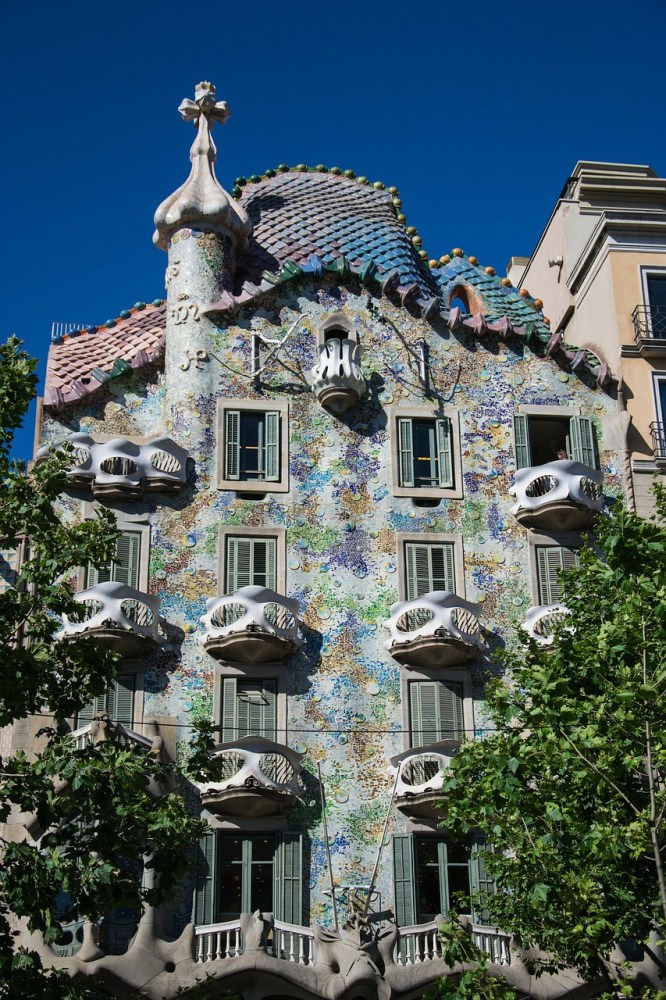
Gazing at the facade of Casa Batlló takes us to the bottom of the Mediterranean. We dive into a marine and legendary allegory where the architecture seems to dissolve into a canvas of light and color.
 |
A skin of scales and legends
Gaudí transformed the exterior wall into an undulating surface of trencadís (broken tile mosaic) that evokes the movement of a calm sea covered in water lilies.
Meanwhile, its iron balconies shaped like masks or skulls, and its bone-like stone columns, give it an organic, mysterious vibe.
The entire building culminates in a ceramic-scaled roof representing the back of a dragon pierced by Saint George’s sword.
The color shift symbolizes the dragon’s blood, ensuring the structure doesn’t just breathe like a living being, but also tells an epic tale through the most fantastic aspects of nature.
|
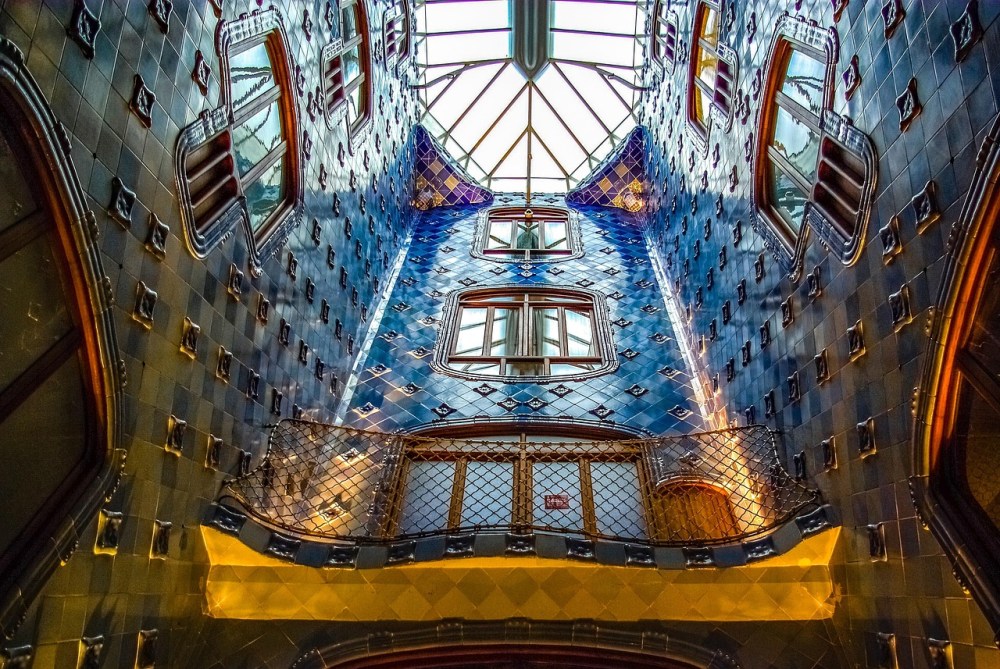
The Courtyard of Lights: The heart of the reef
Stepping into the Courtyard of Lights at Casa Batlló, visitors plunge into a true underwater cavern where architecture pays tribute to the ocean depths.
Gaudí designed a clever gradient of ceramic tiles that transition from an intense cobalt blue at the top to a pearlescent white at the bottom.
This achieves a light distribution so perfect it mimics the sun’s reflection filtering underwater.
|
 |
Casa Vicens: A genius’s first dream 🌺
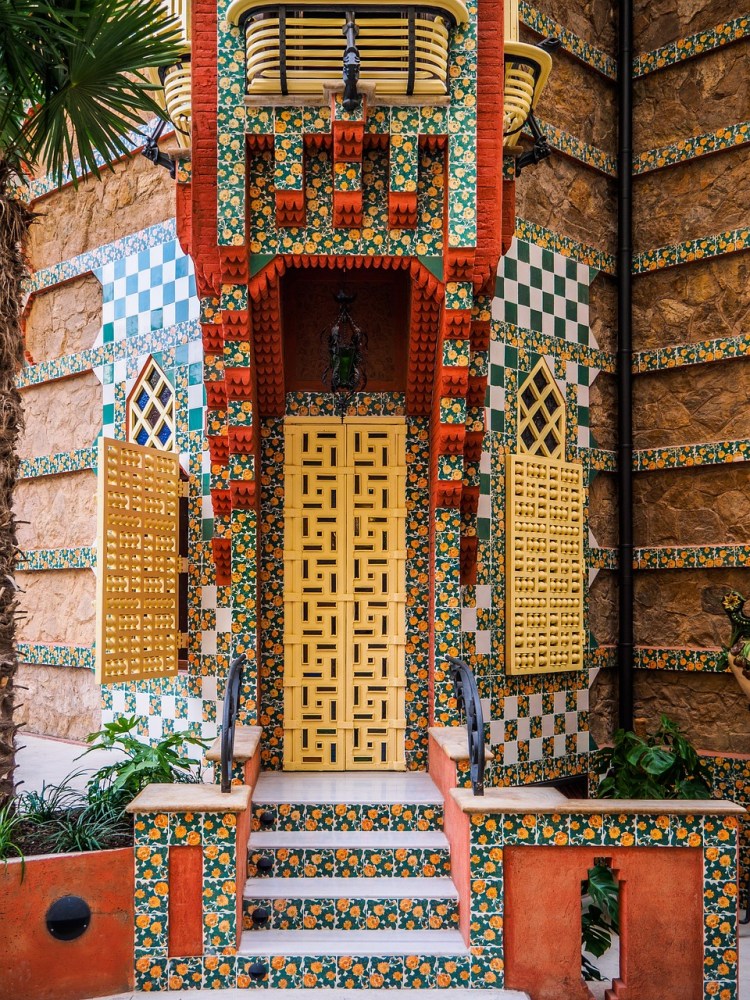
As the first great dream of a young Gaudí, Casa Vicens blooms in the Gràcia neighborhood like an oasis of color and geometry.
 |
A tapestry of ceramics and eternal flowers
In this masterpiece, nature takes over both the structure and its interior.
Its facade is a vibrant tapestry of green and white tiles where marigolds seem to bloom endlessly from the ceramics.
|
The garden turned to iron 🌿
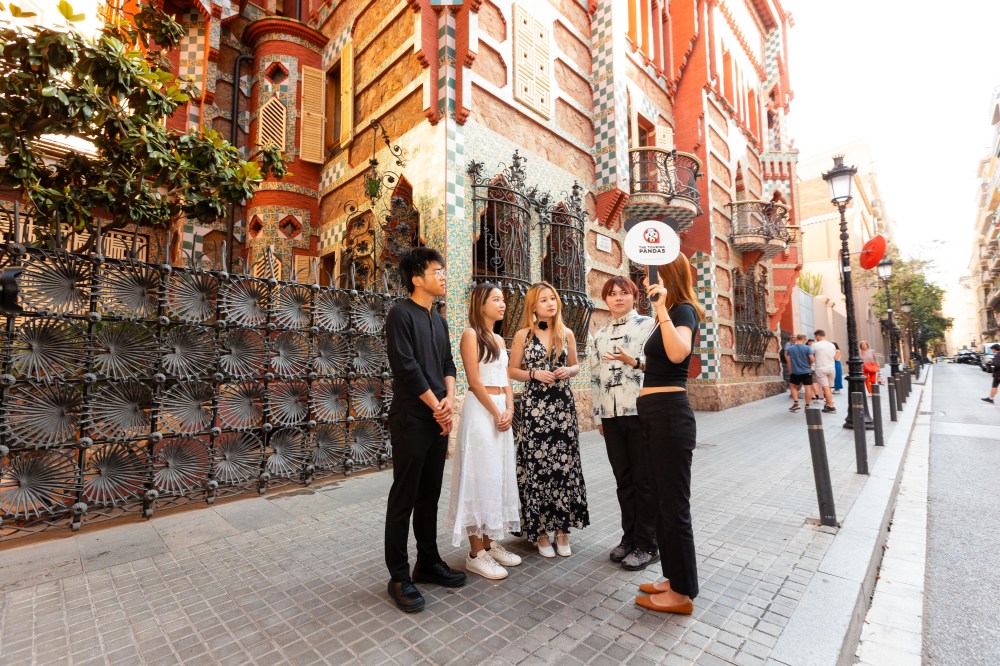
Looking at the impressive wrought-iron gate, inspired by the palm leaves that grew on the original estate, we understand that for the architect, a building had to be an extension of the garden.
This work, with its rich oriental influences, marks the birth of a style where architecture learns to speak the language of flora, turning a residence into a botanical sanctuary.
|
 |
There are many more secrets that Gaudí kept in his works, would you like to come and discover them?
After reading about the profound inspiration of this Catalan genius, we are sure you’ll never look at a column or balcony the same way again. This 2026, with the city buzzing for the centenary and Barcelona’s skyline finally crowned, it’s the perfect time to leave theory behind and step into Gaudí’s revolutionary universe.
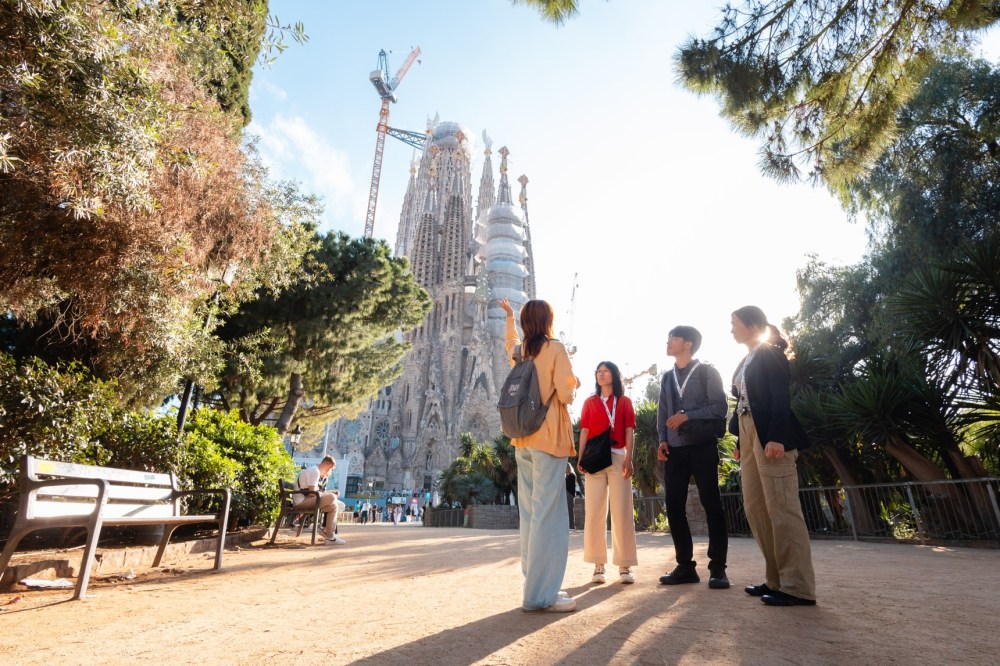
At The Touring Pandas, we take you to explore Gaudí’s legacy accompanied by an official expert guide in your language, available in: English, Chinese, Japanese, and Korean. Here are some of our top options for your visit:
| Discover the most majestic and tallest church in the world: The Bible in stone – La Sagrada Familia ⛪✨
We invite you to “read” this sculpted Bible where every stone has a voice. In this year 2026, with the new Jesus Christ Tower already crowning the Barcelona sky, you’ll discover the sacred forest Gaudí designed to unite the earth with the divine.
👉 [Learn more about the guided tour of the Sagrada Familia]
|
 |
| The 3 houses of the Catalan genius: Casa Vicens, Casa Batlló, and La Pedrera – Casa Milà
Explore the mind and the evolution of Gaudí’s universe through his most intimate architecture. From the oriental garden of Casa Vicens and the ocean of colors at Casa Batlló, to the attics that look like a whale’s skeleton in La Pedrera. It’s a journey through three distinct worlds proving that, for the genius, a house had to have a life of its own, just like its inhabitants.
👉 [Learn more about the guided tour of the Gaudí Houses]
|
|
| Barcelona Day Tour: Gaudí Houses & Sagrada Família
The ultimate route to make the most of your stay in Barcelona. We’ve designed this tour so you can visit Gaudí’s greatest masterpieces at a comfortable pace, away from the rush of mass tourism. Let yourself be guided by an expert speaking your language who will share those hidden details you wouldn’t otherwise know, turning a regular sightseeing day into a real connection with the soul of our city.
👉 [Learn more about the guided Barcelona day tour]
|
 |
✨ Click to reveal your exclusive Panda Discount! 🐼
Would you like to come and discover Gaudí masterpieces?
Use our Panda coupon in your language to get a 10% discount on your adventure!
Coupons:
CHINA10 –JAPAN10 –KOREA10