
🏛️How to Use the Rome Metro🚇

Rome is a vast city filled with iconic landmarks, historic squares, and charming neighborhoods that seem straight out of a movie. The good news is that getting around its main attractions is much easier than it may seem, thanks to the city’s metro network. While it is not as extensive as those of other European capitals, it connects many of the places every traveler wants to visit.
In this guide, The Touring Pandas explains how the Rome Metro works, which ticket is best for your trip, and which stations you should know to make the most of your time in the Eternal City.
🕕 Rome Metro Hours 🕒
The Rome Metro operates every day from 5:30 AM to 11:30 PM, with the last trains departing at that time from each line. If you plan to enjoy Rome’s nightlife, keep in mind that on Fridays and Saturdays the service is extended until 1:30 AM.
As in most major cities, there are peak travel times when trains tend to be busier. Generally, the metro is most crowded between 7:30 AM and 9:30 AM, and again from 5:00 PM to 7:00 PM, when many locals are commuting to and from work.
Rome Metro Tickets and Transport Passes
One of the advantages of public transportation in Rome is that the same ticket can be used across different modes of transport within the city. This is why Rome’s transport tickets are known as integrated tickets.
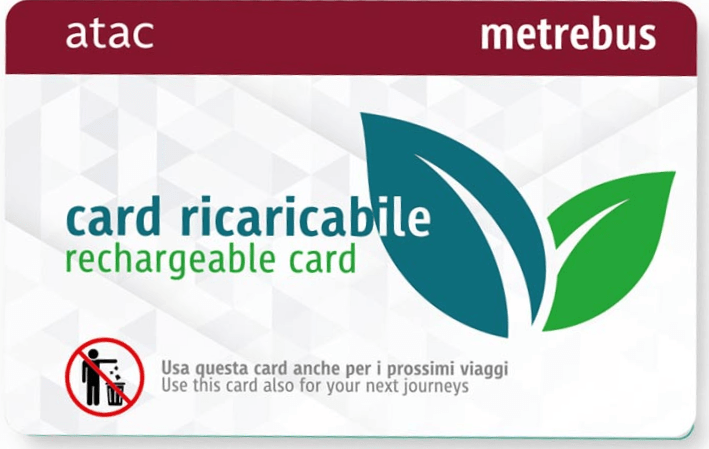
Rechargeable Travel Card
The rechargeable card has a cost of €0.50 for purchases below €4.50. It can be loaded with 1, 2, 3, 5, or 10 tickets and can be purchased or recharged at the red ticket machines available in all metro stations, as well as at authorized sales points.
Single Ticket (BIT)
This is the most affordable option for occasional journeys.
The BIT ticket is valid for 100 minutes from the moment it is validated and allows you to combine metro, bus, tram, and trolleybus rides during that period.
The only restriction is that you cannot exit and re-enter the metro system using the same ticket.
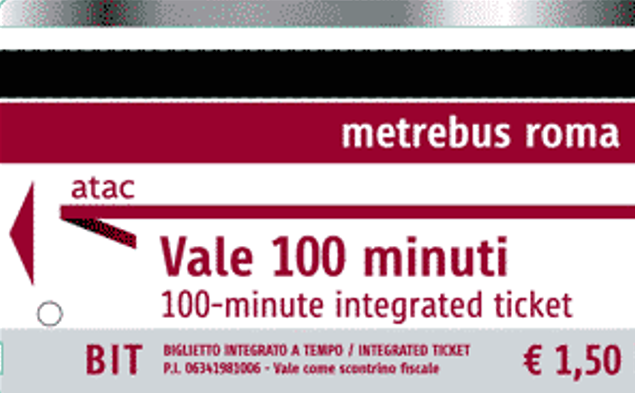
Price: €1.50
24-Hour MetroBus Pass
Ideal if you plan to visit several attractions in a single day. It offers unlimited use of public transportation for 24 consecutive hours from the first validation.
Price: €8.50
48-Hour MetroBus Pass
Provides unlimited travel for two full days from the time of first use.
Price: €15
72-Hour MetroBus Pass
Perfect for a long weekend in Rome. It allows unlimited travel for three consecutive days.
Price: €22
Weekly Pass (CIS)
If you’re staying in Rome for several days and expect to use public transportation frequently, this is often the most convenient option. It includes unlimited travel for seven consecutive days.
Price: €29
Traveler’s Tip: For most visitors, single tickets or the rechargeable card usually offer the best value for money. While multi-day passes may seem cost-effective at first glance, they are rarely worth it unless you plan to make a large number of journeys during their validity period.
Where to Buy Rome Metro Tickets
Buying tickets for Rome’s public transportation system is easy. You can purchase them from:
-
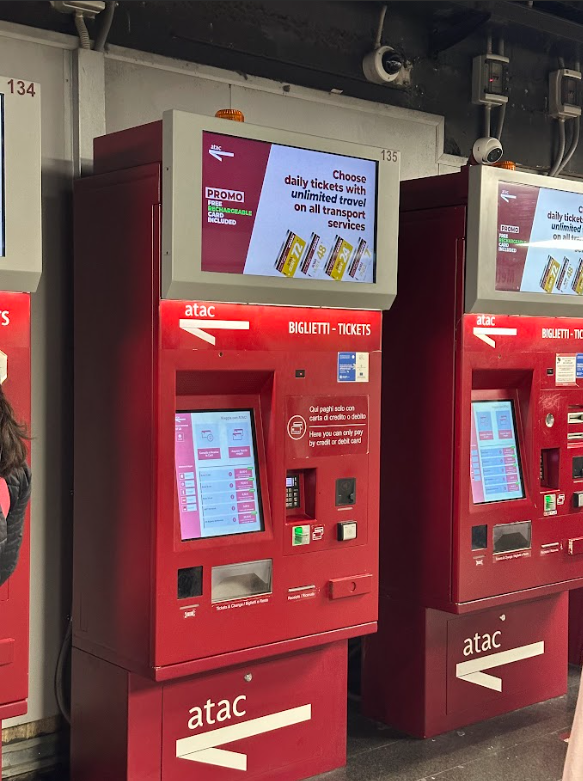
- Ticket machines at metro stations.
-
- Tobacco shops identified by the traditional “T” (Tabacchi) sign.
- Authorized newsstands.
Tap&Go System
You can also travel on the Rome Metro without purchasing a ticket in advance thanks to the Tap&Go system.
This allows you to pay directly with a contactless bank card or compatible devices such as smartphones and smartwatches.
Simply tap your card or device on the contactless readers available at metro gates and on city buses.
🔑Keep in mind that this payment method is personal. One payment covers only one passenger, so you cannot use the same card to pay for multiple travelers at the same time.
🛂If transport inspectors request proof of payment, simply present the card used for the transaction. They can verify that the payment corresponds to a valid ticket.✅
Which Means of Transport Are Included?
All tickets and passes mentioned above can be used on:
-
-
-
- The Metro
- Urban buses
- Trolleybuses
- Trams
-
-
This makes getting around Rome extremely convenient, as you can combine different forms of transportation without purchasing a separate ticket for each journey.
🔑🚇 Rome Metro Lines You Should Know
Although Rome is a huge city, its metro network is surprisingly simple. It currently consists of three lines: A, B, and C.
The good news for visitors is that most of Rome’s major attractions are located along Lines A and B, meaning you’ll probably use these two lines throughout most of your stay.
Termini Station: The Heart of Rome’s Transport Network
If there is one station you should remember, it’s Termini.
This is where Metro Lines A and B intersect, making it the most important connection point in the entire network. It is also Italy’s largest railway station and the arrival point for numerous national and international train services.
Termini is also where the Leonardo Express arrives, the direct train connecting Fiumicino Airport with central Rome.
There’s a good chance you’ll pass through Termini several times during your trip, so becoming familiar with the station can save you a lot of time.
Line A (Orange Line)
Line A runs from the northwest to the southeast of Rome, connecting Battistini and Anagnina.
It is the line most commonly used by tourists because it provides easy access to many of Rome’s most famous landmarks.
Trains usually run every 3 to 5 minutes.
Most Useful Stops for Travelers
Cipro – Musei Vaticani
The most convenient station for visiting the Vatican Museums and the Sistine Chapel.
Ottaviano – San Pietro
Perfect for reaching St. Peter’s Square and St. Peter’s Basilica on foot.
Spagna
The ideal stop for visiting the Spanish Steps, Piazza di Spagna, and the nearby Villa Borghese Gardens.
Barberini
Located just a short walk from the Trevi Fountain and also a convenient option for visiting the Pantheon and Piazza Navona.
Termini
Connection with Line B and Rome’s main train services.
Line B (Blue Line)
Line B crosses Rome from the northeast to the south and connects several of the Italian capital’s most iconic landmarks.
Its main route runs from Laurentina to Rebibbia, although an additional branch extends to Jonio.
The usual frequency is approximately every 5 minutes on weekdays.
Most Important Stops
Termini
Rome’s main interchange station.
Colosseo
Probably the most impressive metro stop in Rome. As soon as you leave the station, you’ll find the Colosseum standing almost directly in front of you, along with the Roman Forum and the Imperial Forums.
Piramide
Particularly useful for travelers arriving from the airport via regional trains and for those planning to visit the lively Testaccio neighborhood.
What Is Line B1?
From Bologna station onward, some trains continue toward Rebibbia while others head toward Jonio.
For this reason, it’s always worth checking the destination displayed on the electronic signs before boarding.
Line C (Green Line)
Line C is the newest addition to Rome’s metro network and is still being expanded.
Currently, it connects San Giovanni with the eastern part of the city.
While it is very useful for local residents, it has limited relevance for most visitors because it does not serve the main tourist attractions.
As a result, during a typical trip to Rome, you may not need to use it at all.
Practical Example: How to Use the Rome Metro
How to Get from the Vatican to the Colosseum by Metro
This is one of the most common routes for travelers visiting Rome for the first time. The good news is that it’s simple, affordable, and takes approximately 15 to 20 minutes.
Step 1: Head to Ottaviano Station
If you’re visiting St. Peter’s Square or St. Peter’s Basilica, the nearest metro station is Ottaviano – San Pietro, located just a few minutes away on foot.
Step 2: Take Line A (Orange Line)
Once inside the station, follow the signs toward Anagnina.
There’s no need to memorize every stop along the route—simply make sure you’re boarding a train heading in the direction of Anagnina.
Step 3: Get Off at Termini
After a few stops, you’ll arrive at Termini, the main interchange station of the Rome Metro.
Here, you’ll need to transfer to Line B.
Step 4: Change to Line B (Blue Line)
Follow the blue signs and board a train heading toward Laurentina.
Step 5: Get Off at Colosseo
The stop after Cavour is Colosseo.
As soon as you exit the station, you’ll be rewarded with one of the most spectacular views in Rome: the Colosseum standing right in front of you.
⏱ Approximate travel time: 15–20 minutes
🎫 Required ticket: A 100-minute BIT ticket (€1.50) or any valid Rome public transport pass.
💡 Golden Tip for Using the Rome Metro
Before boarding a train, take a few seconds to check the information panels located on the platform.
These display the full route of the line and clearly indicate the final destination of each train. This is especially important on Line B, where some trains continue toward Rebibbia while others head to Jonio.
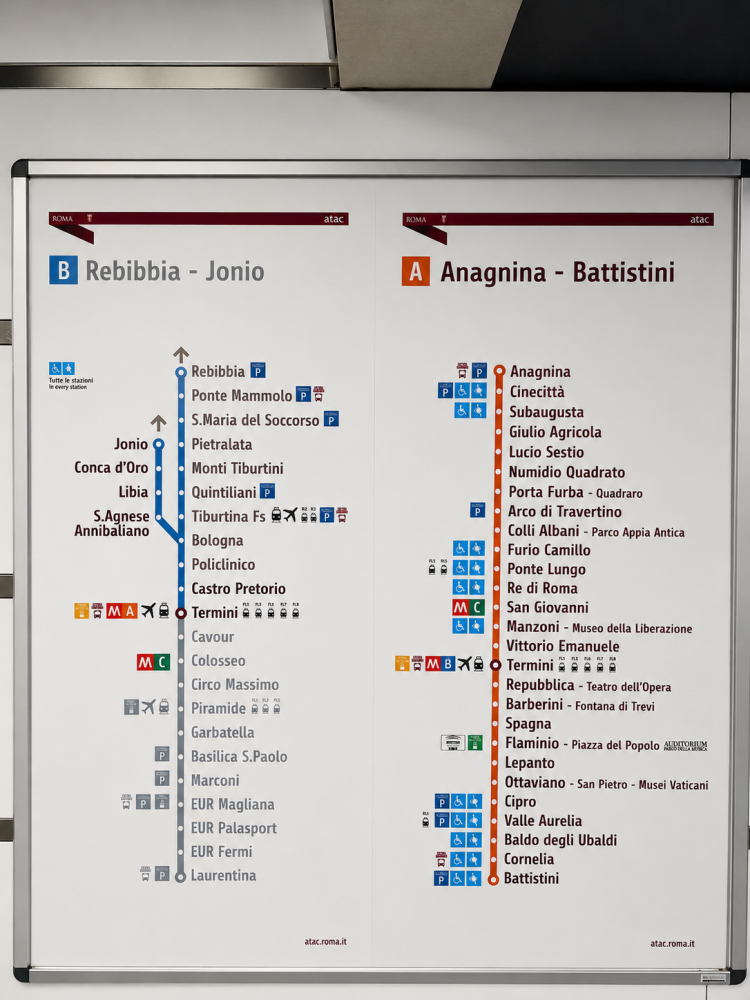
A quick glance at the signs can prevent you from traveling in the wrong direction and save valuable sightseeing time during your trip to Rome.
📌 Final Tips for Getting Around Rome with Ease
Always Validate Your Ticket
Failing to validate a ticket is one of the most common mistakes made by tourists in Rome.
Even if you notice many passengers boarding without validating anything, most locals use monthly passes or electronic payment systems.
If you’re traveling with a physical ticket, you must validate it before starting your journey.
🛂Ticket inspectors carry out frequent checks, and fines can easily cost more than several days of public transport. If you do receive a fine, consider paying it immediately or within the first five days, as the amount is often significantly reduced.
Avoid Rush Hour Whenever Possible
If your schedule allows for some flexibility, try to travel outside peak commuting times.
You’ll enjoy a more comfortable journey and often save time by avoiding crowded trains and stations.
Keep an Eye on Your Belongings
Rome is generally a safe city for visitors, but pickpockets often target crowded stations and busy metro carriages.
Keep your backpack closed, store valuables securely, and remain aware of your surroundings.
If you’re traveling by bus, pay extra attention to your belongings and remember that physical tickets must be validated onboard.
The Metro Doesn’t Reach Everywhere
Although the metro is extremely convenient for covering longer distances, some of Rome’s most charming neighborhoods are best explored by combining buses, trams, and walking.
Areas such as Trastevere are a perfect example.
In fact, part of Rome’s magic lies in wandering through its streets and discovering hidden corners that never make it into the guidebooks.
Discover Rome with The Touring Pandas
Now that you know how the Rome Metro works, all that’s left is to plan your itinerary and start exploring one of the most fascinating cities in the world.
While getting around Rome is relatively easy, understanding the history behind each monument, square, and hidden corner transforms the experience entirely.
That’s why at The Touring Pandas, we’ve carefully selected a range of guided tours in your language, allowing you to explore the Eternal City alongside expert guides who will help you truly understand and appreciate every place you visit.
Among our most popular experiences, you’ll find:
Colosseum Tour, Roman Forum & Palatine Hill
Discover the Colosseum, the Roman Forum, and Palatine Hill—the very heart of Ancient Rome. Learn about gladiators, emperors, and the rise of one of history’s greatest civilizations.
Guided Tour of the Vatican Museums, Sistine Chapel & St. Peter’s Basilica
Explore the Vatican Museums, admire Michelangelo’s masterpiece in the Sistine Chapel, and visit St. Peter’s Basilica while enjoying detailed explanations from a specialized guide.
Rome Day Tour: The Vatican and the Colosseum
The perfect option for travelers who want to experience Rome’s two most iconic attractions in a single day.
Rome City Walk with Pantheon & Trevi Fountain
A guided walking tour through Rome’s historic center, featuring some of the city’s most famous squares, fountains, and monuments.
Rome is a city that surprises you at every turn. At The Touring Pandas, we’re here to help you experience it in a more authentic, comfortable, and enriching way—always in your own language (Available in English, Chinese, Japanese, and Korean) and alongside passionate local experts who love sharing the history and stories that make Rome unforgettable.
✨ Click to reveal your exclusive Panda Discount! 🐼
Ready to Discover Rome with The Touring Pandas?
Use our Panda coupon in your language to get a 10% discount on your adventure!
CHINA10 –JAPAN10 –KOREA10